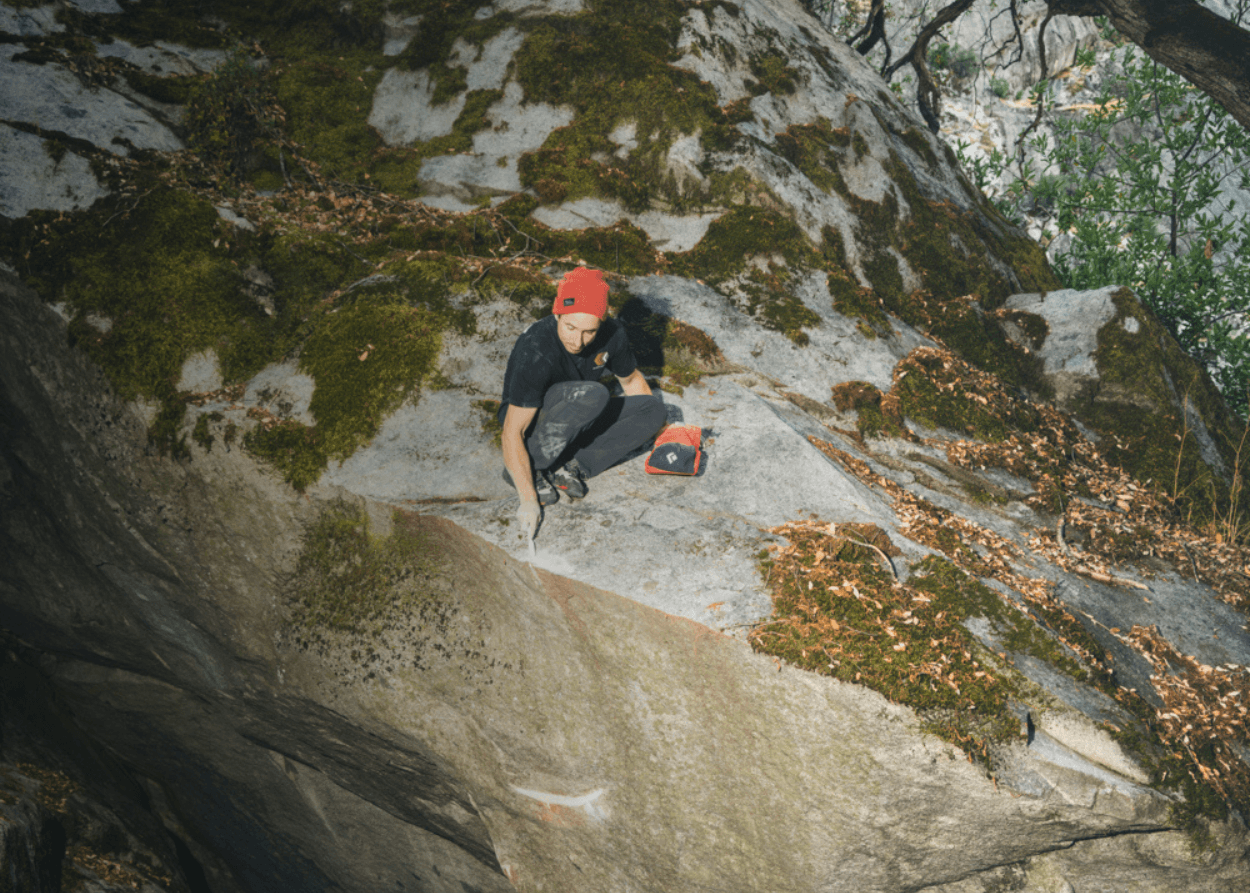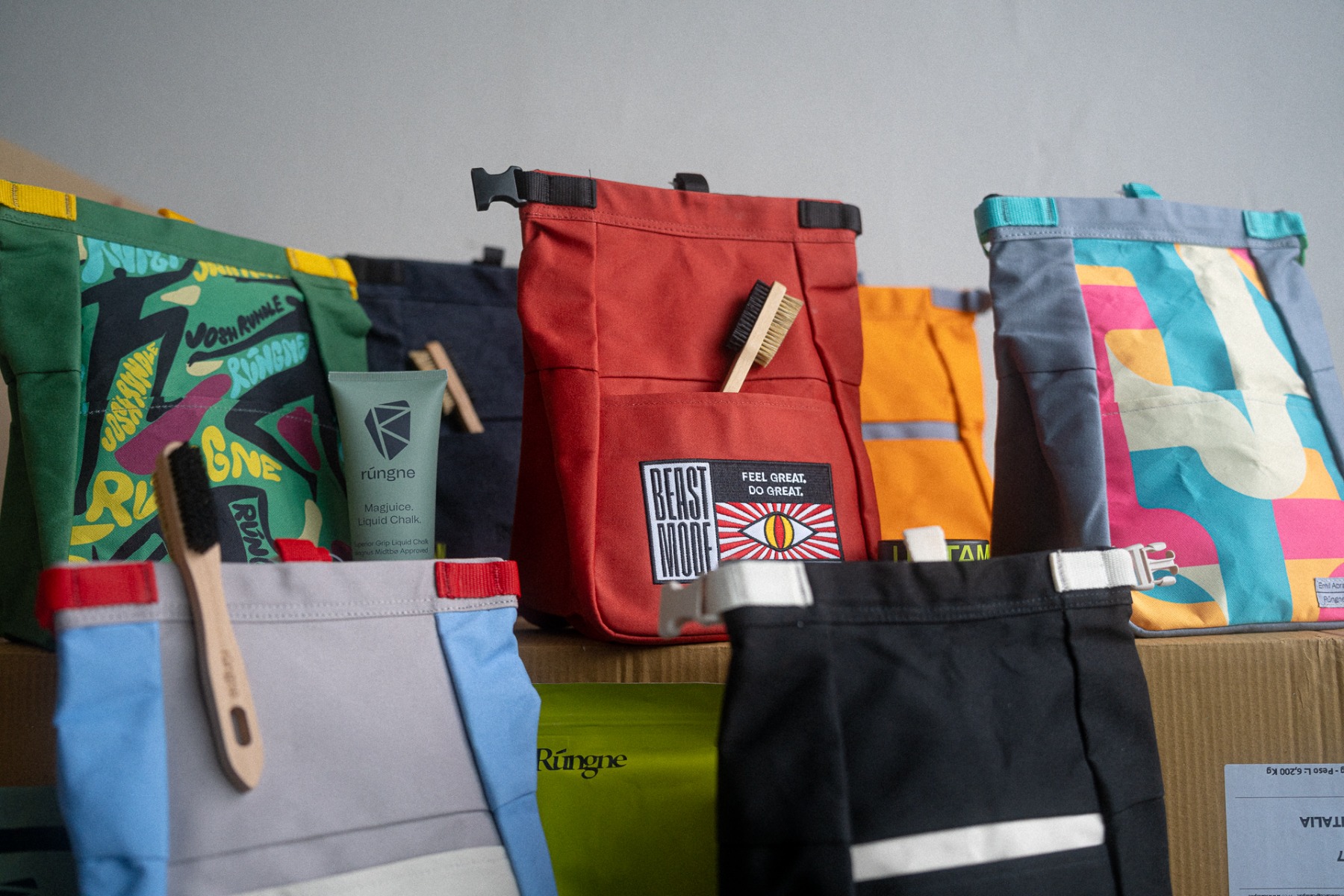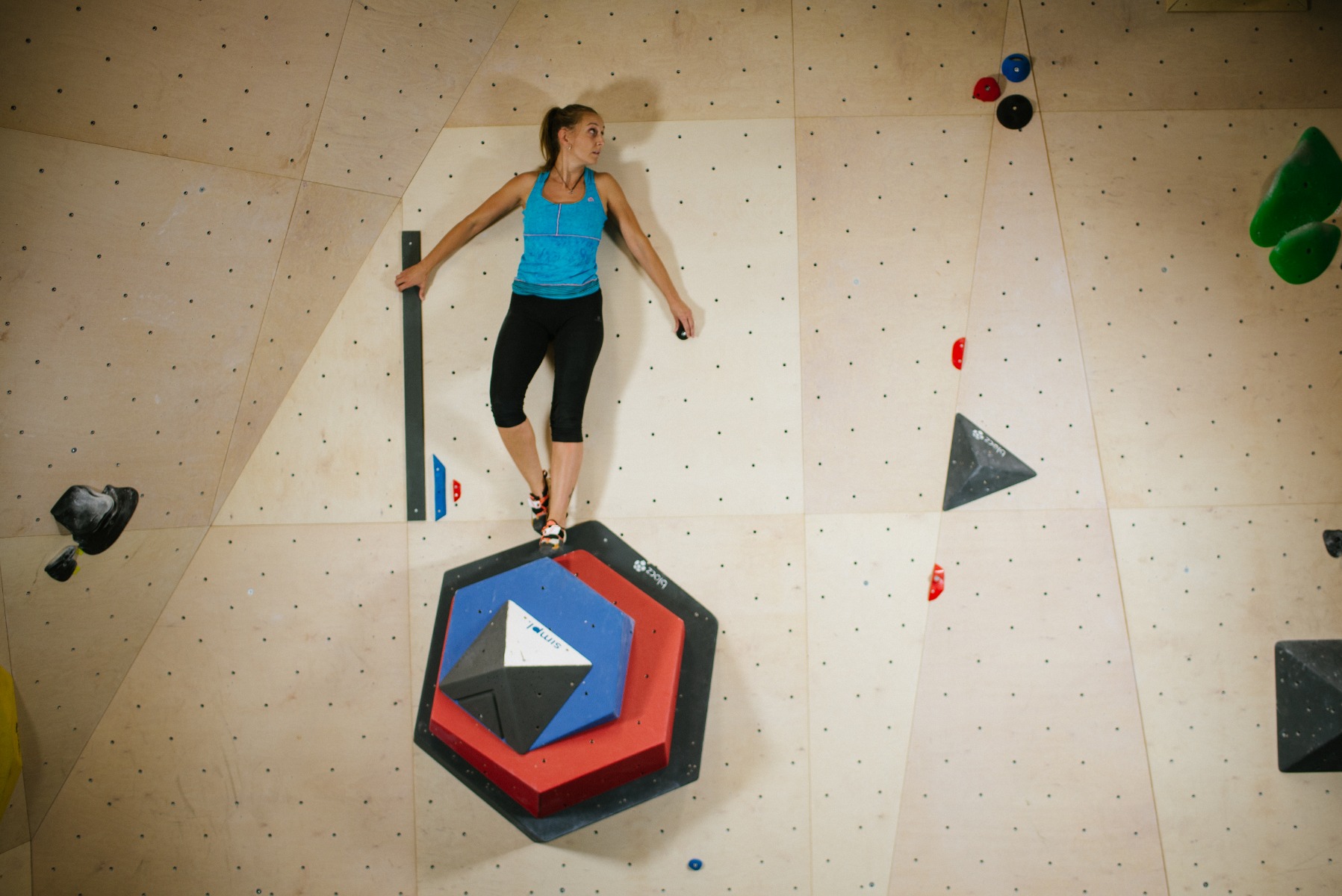
The use of chalk in sport climbing is due to an intuition of John Gill, a famous boulderer of the 50s who came from the world of gymnastics, where it was already widely used to control the sweating of the hands. From then on the chalk has had ample success even among climbers acquiring some additional functions, such as that of marking the holds (a habit that is often subject to controversy) or to clean the rock from dust, moss and lichens.
The differences among the blends of all the chalks you can find on the market determine the purity and therefore the durability of it in our hands. A better chalk (without additives) is also less harmful to the health of both the lungs and the epidermis.
Climbing chalk comes in the form of a cube, powder, chunks, or liquid:it often happens that those who approach climbing wonder which is better and how it should be used, and the question is more than legitimate. In general, it is said that everyone chooses the one that prefers "to sensation", but there are two or three guidelines that can come in handy.
FASI - Federclimb Media Center
Climbing chalk for indoor use
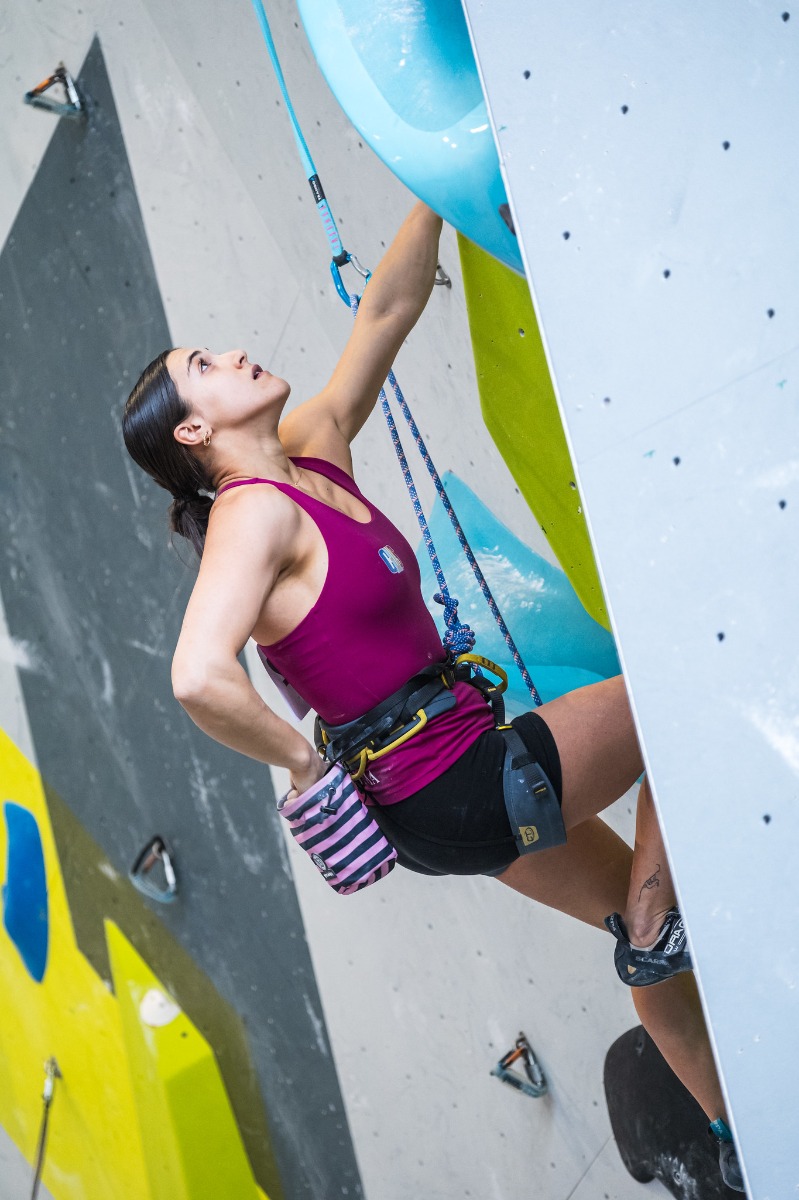
First, you should always use liquid chalk in climbing gyms, and possibly without exaggeration, just enough to "dry" your skin up. When using liquid chalk, we often do not know how to regulate ourselves because we do not understand how much of it we have put until it dries. In this case "melius abundare quam deficere" is not a saying that reflects reality: pouring too much chalk means having even less grip, too dry hands, and much more dust in the air we breathe.
To avoid detaching the excess chalk from our hands with a stonemason, here are the instructions for using the liquid chalk: pour a small amount on one hand, spread well with the other, let it dry, and climb. Please just repeatonly if necessary.
Chalk balls
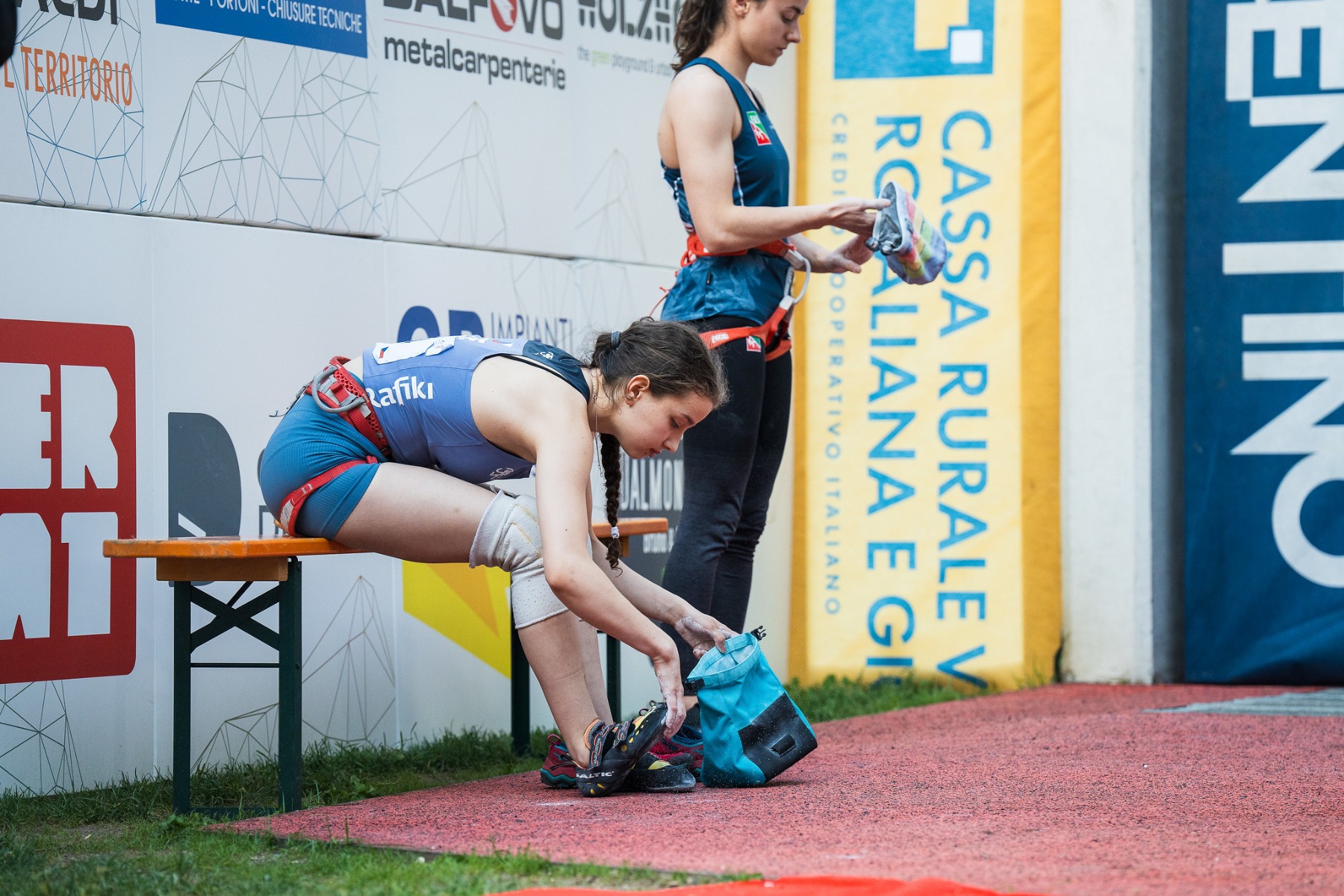
Chalk balls are as well to long debates, both because you often do not understand how to use it, and because you do not know who should use them. You could efficiently use them to clean the holds from dust, without exceeding. We can venture to say that it is more used by boulderers who often have to clean up for example an alpine boulder at the beginning of the season, but it is not a rule.
Even some sport climbers are happy with chalkballs: it has the advantage that you can not accidentally pour them into the backpack, and you will hardly end up having too much of it on your hands. On the other hand, if you let it fall down halfway while you are climbing, all you have to do is cry. The instructions for use are very simple: take the ball and make it turn in your hands, or use it gently on the rock (usually in a team with a toothbrush).
Chalk balls can also be refillable, and they are therefore more sustainable than the liquid chalk in plastic bottles. there is no trick to getting more chalk out through the fabric, especially when they are new: it depends on the quality of the one you bought. It is often well tolerated by gyms since its ability to disperse dust in the air is less than that in powder or pieces (but in any case ask your gym which is allowed to use it).
FASI - Federclimb Media Center
Chalk Blocks
The cube is solid and pure magnesium carbonate. It has the advantage that you can control the thickness of the pieces you get in your hand by breaking one chunk at a time and keeping the whole part safely in the chalk bag or backpack. So you can make some powder with a piece of cube, and some larger pieces to mark the holds (remember to cancel them).
Chalk powder
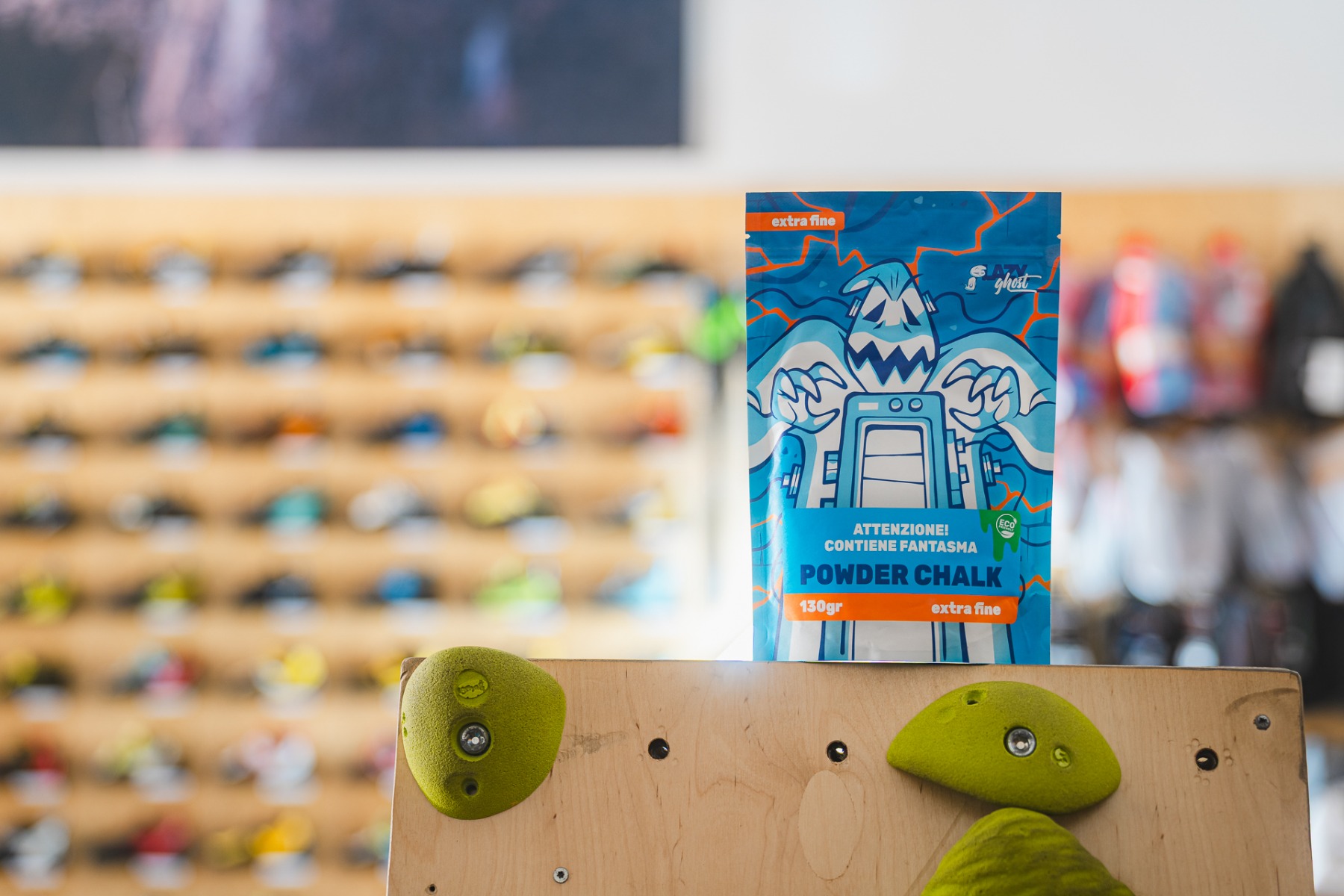
The powder or chunky chalk bags are a great classic, loved by every climber. They are nothing but chalk cubes that have been crumbled and then packed in resealable bags so that it does not pour everywhere. The chunky chalk is often preferred by those who love to mark the holds, and by those who want to crush something in its own hands before leaving for an attempt. Then open the chalk bag, pulverize a few pieces of it in your hands, and then pulverize the climbing route or boulder.
The finest version of chunky chalk is the powder. Also in this case the thickness varies from brand to brand: the counterpart to the convenience of being easily poured into the bag, is our inability to control the grain. It is also convenient to clean the rock, but it is practically impossible to use it to mark the holds.
Regardless of where we climb, remember that moderately using magnesium is a sign of respect for the rock and the environment where we are. Have grip!
Immagine di copertina di Friction Labs, tutte le altre di FASI Media Center